The roadmap includes 88 measures and seven strategic projects, with confirmed funding of over 175 million euros and a projected total of 216 million through 2028.
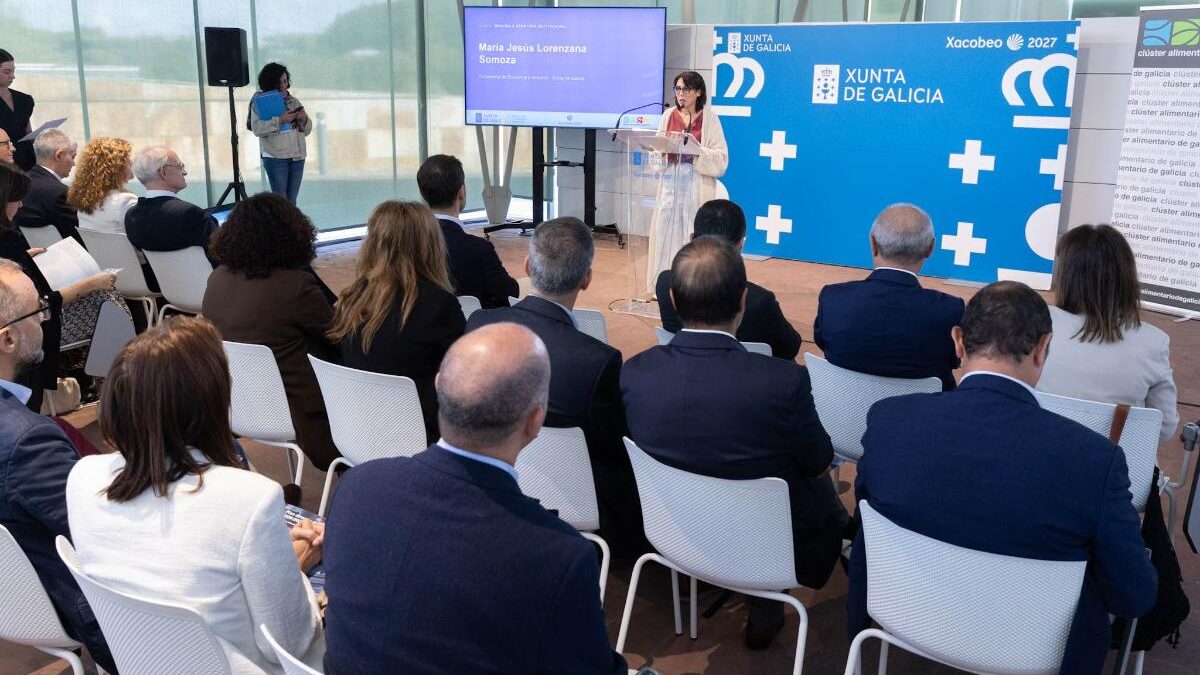
The Cidade da Cultura de Galicia in Santiago de Compostela hosted the presentation of the Food Sector Master Plan 2026-2028 on 1 October. Developed by the Xunta de Galicia in collaboration with the Galician Food Cluster (Clusaga), this industrial policy instrument sets out the roadmap for strengthening the competitiveness of one of the most important industries in the Galician economy.
The event, held in the events hall of the Fontán Building, brought together business and institutional representatives from across the sector. The institutional opening was delivered by Andrés Rodríguez Gómez, President of the Galician Food Cluster, and María Jesús Lorenzana Somoza, Regional Minister for Economy and Industry. Antón Costas Comesaña, President of the Economic and Social Council of Spain, then gave a talk titled “Geopolitics and the return of industrial policy: Implications for Galicia and the food sector.” Finally, Belén Yáñez Barge, Head of the Industrial Promotion Service of the Xunta de Galicia, presented the contents of the plan.
A strategic sector for Galicia
The food industry is one of the region’s main industrial pillars. According to the Galician Statistics Institute (IGE, Structural Business Statistics, 2023), it accounts for 24.75% of people employed in Galician industry, 24.5% of industrial turnover and 20.3% of industrial premises. In 2025, the sector comprised 2,142 companies and 35,307 Social Security registrations. That is 5,355 more registrations than in 2009, an increase of 17.88%. In terms of turnover, the Galician food industry represents 7.9% of the national total, making Galicia the autonomous community with the fifth-largest share.
The plan positions the food industry as the backbone of the food system. Its processing activities add value to products, extend their shelf life, adapt them to market demand and open up new export opportunities. Ancillary industries and services complement this role by ensuring efficiency, innovation and regulatory compliance throughout the entire value chain.
Objectives, pillars and measures
The plan is built around two strategic objectives. The first is to boost and consolidate Galician industry by increasing its productivity and competitiveness. The second is to strengthen the industrial ecosystem. These objectives lead to five action pillars comprising a total of 88 measures:
- A productive, sustainable and export-oriented Galician industry: 22 measures covering internationalisation, digitalisation and sustainability.
- Sector competitiveness and project consolidation: 33 measures covering competitiveness, innovation and investment.
- People: 19 measures focused on talent and generational renewal.
- Improvement of infrastructure and industrial land: 4 measures.
- New governance: 10 measures.
Seven strategic projects
The plan takes shape through seven flagship projects:
- PROALIS promotes circularity, sustainability and adaptation to climate change.
- GLOBALFOODLINK strengthens international positioning and access to new markets.
- TALENTO 2030 focuses on attracting, retaining and developing human capital.
- FOODFORWARD provides strategic intelligence to support decision-making.
- FOODNET builds global networks and connections with strategic opportunities.
- INNOVAFOODS drives disruptive innovation and sustainable solutions.
- SMARTFOODINDUSTRY supports smart industrialisation and financing for growth.
Economic framework and governance
The plan has a budget of 72.3 million euros for 2026 and confirmed funding of 175.45 million euros for 2026-2028. The projected total reaches 216 million euros.
Implementation will be coordinated by the Regional Ministry for Economy and Industry, together with the Regional Ministries for Rural Affairs and for the Sea. Economic and social stakeholders will also take part through a dedicated sector committee and Xunta working groups. Results will be evaluated on an ongoing basis together with the sector, so that the measures can be adapted to the industry’s needs and to the challenges of the years ahead.
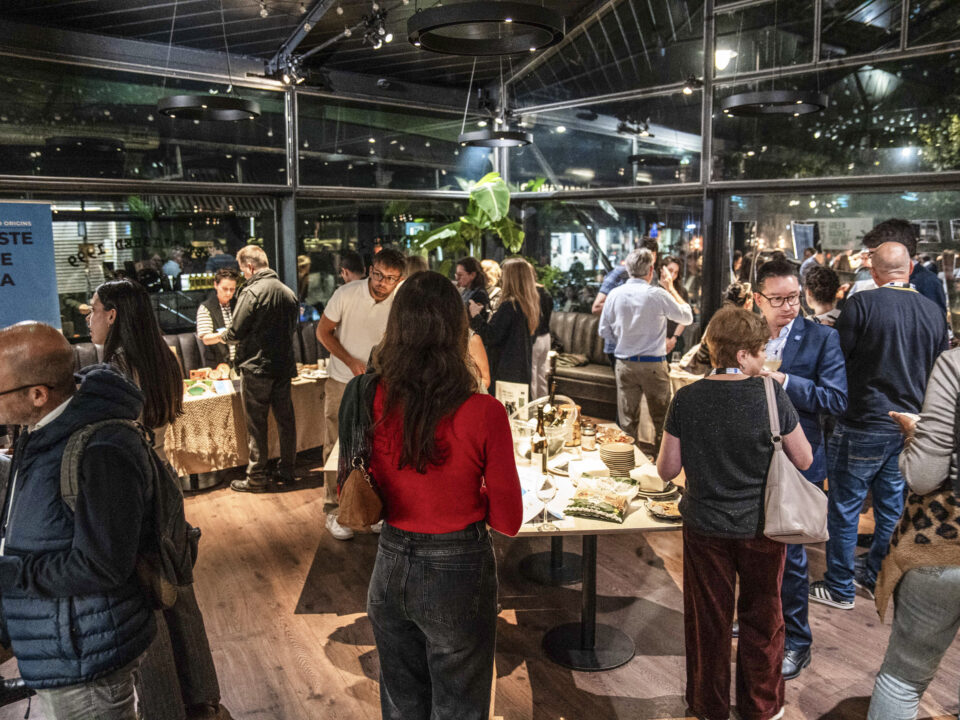
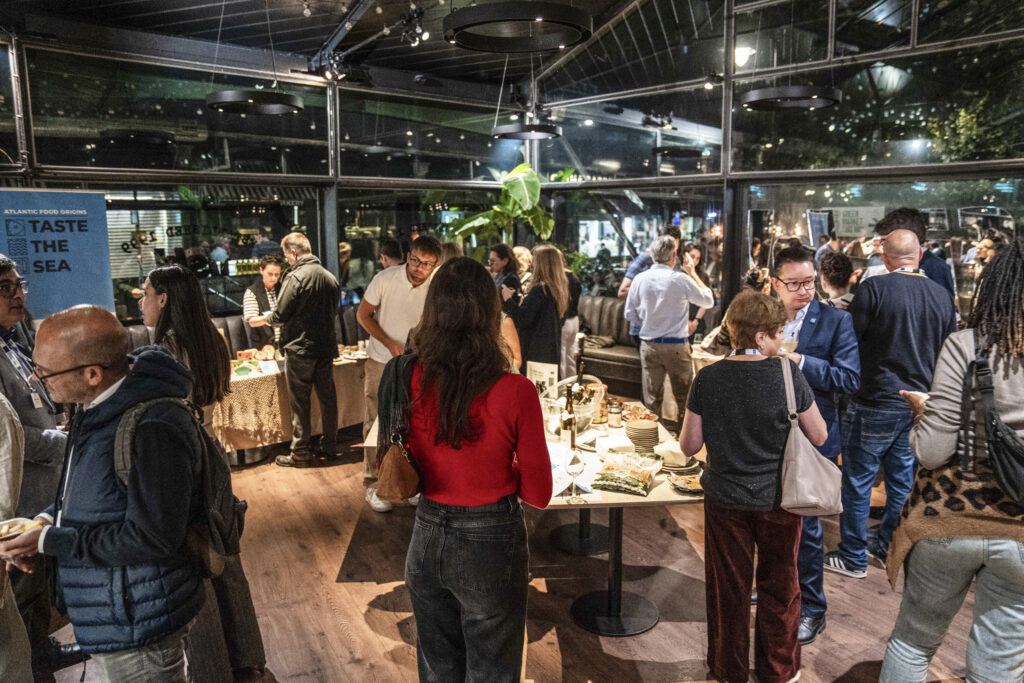
The event closed with a networking lunch for attendees.
Related posts